
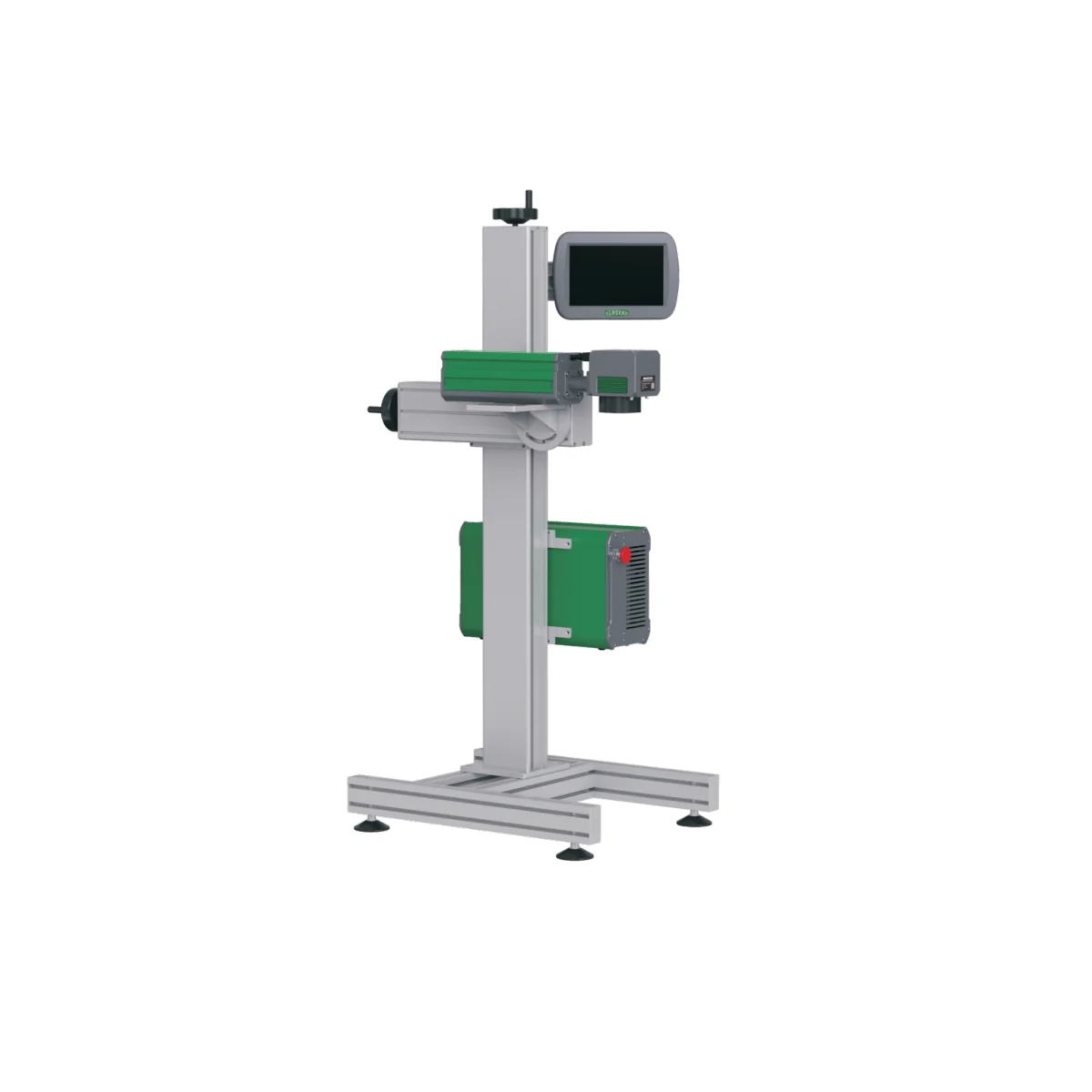
Photo: Flying fiberFlying UV
Flying fiber
Also called a laser coder for production lines.
| Dimensions | 650 × 550 × 1420 mm |
|---|---|
| Weight | 50 kg |
| Laser power | 20/30/50 W |
| Materials | metals and most non-metals |
| Dimensions | 650 × 550 × 1420 mm |
|---|---|
| Weight | 70 kg |
| Laser power | 3/5/10/15 W |
| Dimensions | 650 × 550 × 1420 mm |
|---|---|
| Weight | 48 kg |
| Laser power | 30/40 W |
| Materials | non-metals |
| Dimensions | 650 × 650 × 1420 mm |
|---|---|
| Weight | 80 kg |
| Laser power | 20/30/50 W |
| Dimensions | 750 × 650 × 1420 mm |
|---|---|
| Weight | 75 kg |
| Laser power | 30/40 W |
A laser marking machine marks codes on packaging and products. It is used on production lines. The laser type is selected to the substrate and the code. Fibre lasers mark metals and most non-metals. CO2 lasers mark non-metals. The mark is permanent. It does not use ink or foil. Power, speed, and field size are listed in the specifications. Other requirements are confirmed on the quotation.
The laser beam is steered by mirrors and marks the surface by changing or removing a very thin layer. No ink is used. Flying types mark products while they move on the conveyor; static types mark products that are held still.
Dates, batch numbers, codes, and logos on bottles, caps, cartons, and other packaging. The material decides the laser type.
The product and its material, what must be marked, whether the product is moving or still, the line speed, and the site.
Related guides: Laser marking machine